
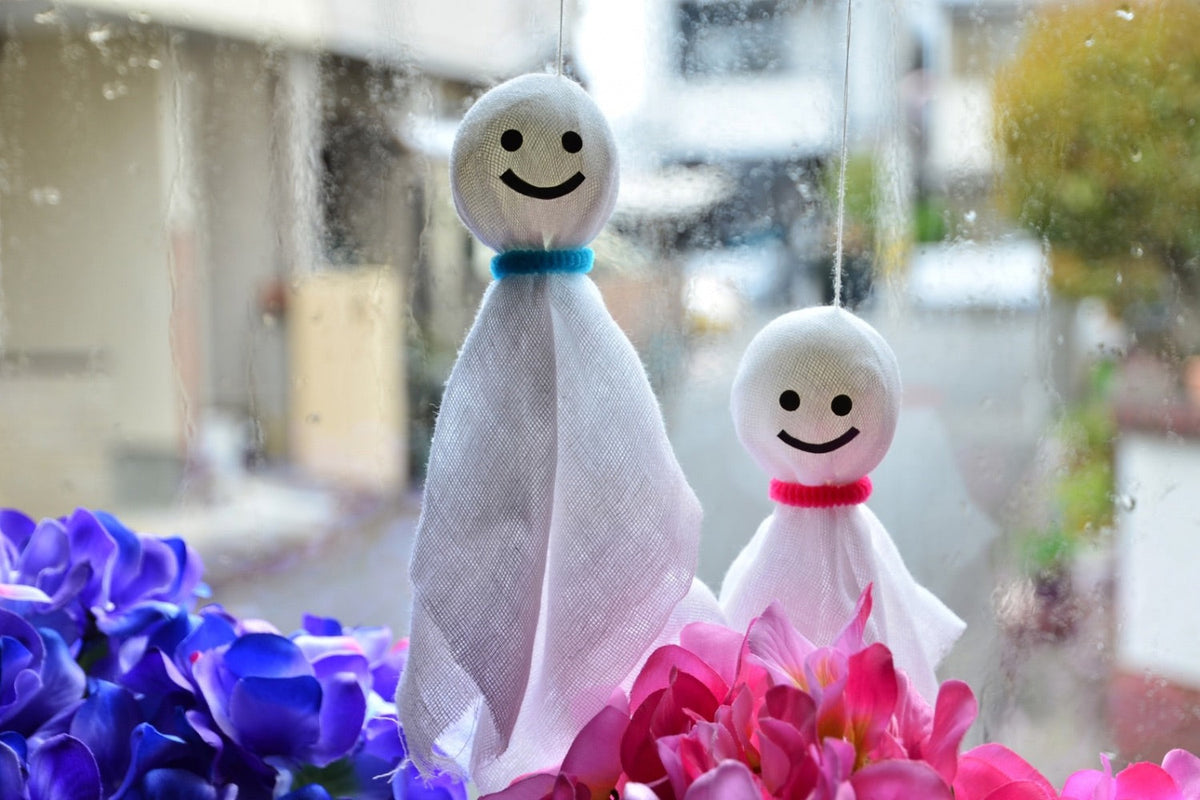
Japan’s rainy season brings many cloudy and rainy days, which naturally means spending more time at home. To people outside Japan, it may seem like a slightly unusual tradition, but in Japan there is a long-standing custom of hanging a small handmade doll called a Teru Teru Bozu by the window and wishing for sunny weather.
What Is Teru Teru Bozu?

Teru Teru Bozu is one of the seasonal traditions many Japanese children grow up with. I still remember making one the day before a school trip or sports festival, hoping for sunshine the next day. Even now, my daughter asks to make one whenever she hopes for good weather. The name “Teru Teru Bozu” is written in Japanese characters as “照照坊主.” “Teru” means “to shine,” referring to sunshine, while “bozu” means a monk or shaved-headed priest. The doll’s round head is said to resemble a Buddhist monk, making it a unique symbol of Japanese culture.
The History and Meaning of Teru Teru Bozu
There are several theories about the origin of Teru Teru Bozu. One comes from an old Chinese tradition called “Sao Qing Niang,” in which a paper doll of a girl holding a broom was believed to sweep away rain clouds and bring sunny weather. It is thought that this custom was introduced to Japan and gradually evolved into today’s Japanese weather doll. Another theory is connected to a Japanese yokai (supernatural spirit) called “Hiyori Bo,” which was believed to bring sunny weather. In the past, people often connected nature and weather with spiritual or mysterious beings. Perhaps Teru Teru Bozu also carries those wishes and hopes within its tradition. By the Edo period, Teru Teru Bozu was already widely known throughout Japan and was especially important for farming communities that depended on good weather. Later, the Japanese children’s song “Teru Teru Bozu” helped make it even more popular among children, becoming one of Japan’s best-known Japanese traditions.
How to Make a Teru Teru Bozu
One of the charming things about Teru Teru Bozu is how easy it is to make with simple household materials. All you need are tissues, string, a rubber band, and a marker. Roll tissues into a round shape for the head, wrap another tissue around it, tie the neck with a rubber band, and draw a face. Then hang it near a window and hope for sunshine. Today, we can easily check the weather forecast on our phones at any time. Still, the feeling of looking up at the sky and quietly wishing for a sunny day may not have changed very much over the years. This simple custom remains a beloved part of the Japanese rainy season.
Cozy Rainy Day Activities at Home
Rainy days sometimes have a gloomy image, but they can also become a special opportunity to slow down and enjoy quiet time at home. These rainy day activities can help create a more relaxing and meaningful day.
Reading on a Rainy Day

For example, reading while listening to the sound of rain can feel incredibly comforting. Whether getting lost in a novel or slowly flipping through essays or poetry, it creates a perfect cozy rainy day atmosphere that helps you step away from the busyness of daily life.
Rainy Day Cleaning
Rainy days are also said to be perfect for cleaning. The humidity helps keep dust from floating around and softens dirt, making it easier to clean windows, screens, and balconies. Many people use the rainy season in Japan as an opportunity to refresh and organize their homes.
Coffee, Tea, and Quiet Moments

Rainy days can also be a wonderful opportunity to slow down and unwind. Brewing your favorite coffee or tea and simply watching the steam rise from your cup can feel surprisingly relaxing. Listening to the sound of rain outside while writing your thoughts in a notebook can also bring a sense of clarity and calm. Sometimes, putting your feelings into words helps clear your mind in an unexpected way.
Cooking and Baking at Home
If you have extra time, trying a more elaborate recipe or baking sweets can also make the day feel cozy and rewarding. The smell of warm soup or freshly baked treats somehow feels even more comforting on rainy days. Making your favorite coffee or tea, watching the steam rise from the cup, and simply relaxing while listening to the rain can feel wonderfully peaceful as well. It is also a lovely time to spend with family. Doing crafts with children, reading together, or watching movies can turn an ordinary rainy day into a warm memory and provide fun indoor activities for kids.
Family Time at Home
It is also a lovely time to spend with family. Doing crafts with children, reading together, or watching movies can turn an ordinary rainy day into a warm memory and provide fun indoor activities for kids. Among these rainy-day activities, origami is especially popular with children in Japan and is a wonderful activity for parents and children to enjoy together at home.
Origami Crafts for Rainy Days

Origami is one of the most popular origami crafts in Japan and a wonderful craft to enjoy with children during the rainy season. One of the best things about origami is that you can create something different every time, and once finished, you can display your creations and enjoy a sense of accomplishment. It is also affordable, easy to prepare, and does not create much mess, making it perfect for rainy days at home. Origami can also help children develop creativity and fine motor skills.
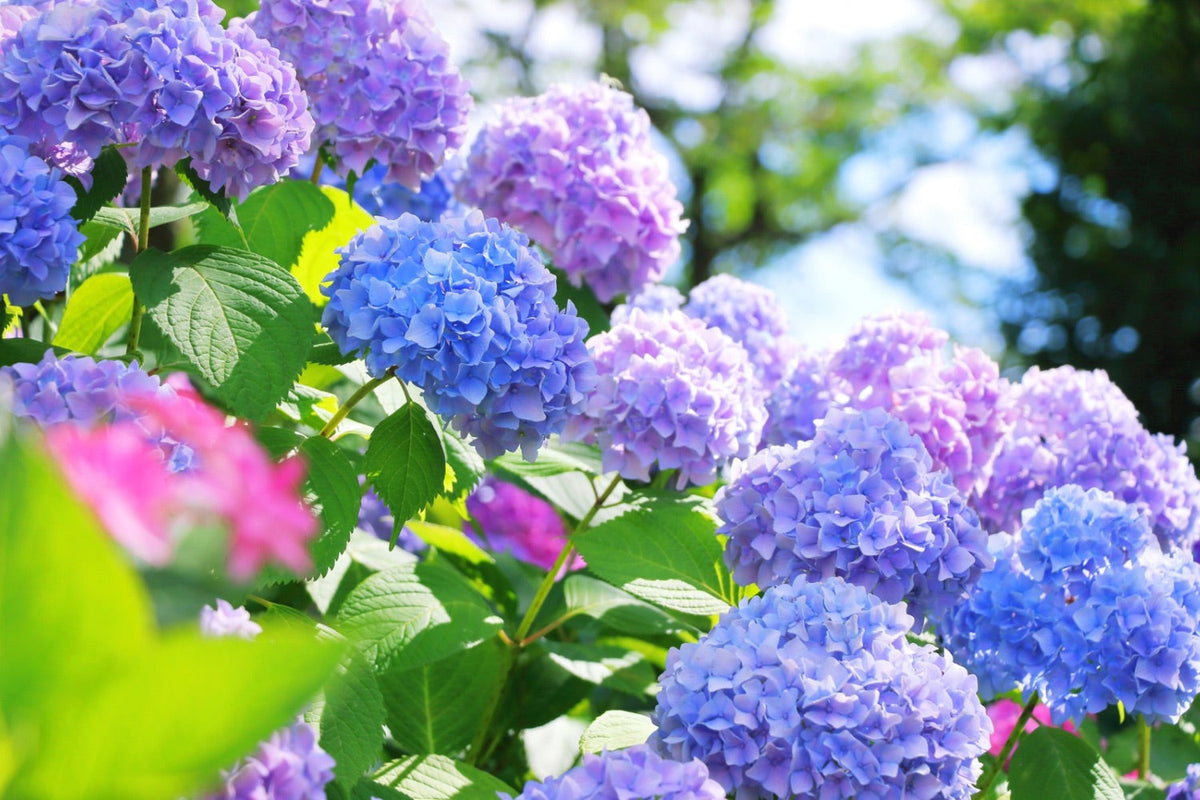
During Japan’s rainy season, hydrangeas bloom beautifully in shades of pink, purple, and blue. These flowers are one of the symbols of the season, and making hydrangea origami can be a fun rainy-day craft to enjoy at home. Hydrangea origami can be made by dividing a standard sheet of origami paper into four smaller squares and folding each piece individually. One important tip is to fold with the colored side facing inward. Even if the folds are not perfectly aligned, the finished flowers still have a unique handmade charm.
How to Make Origami Hydrangeas

- Make fold lines on the paper.
- Cut the paper into four equal pieces along the fold lines.
- Make additional fold lines.
- Fold into a triangle and crease firmly.
- Fold along the crease lines.
- Open one flap and fold it toward the center.
- Repeat on the other side.
- Fold the top and bottom corners to create crease lines.
- Open along the crease lines.
Attach the folded pieces together to complete the hydrangea flower craft.
The Quiet Beauty of Rainy Days
Sunny days make us want to go outside and stay active, but rainy days have their own quiet beauty. In the middle of busy daily life, perhaps rainy days give us a chance to pause, breathe, and reconnect with ourselves. Experiencing a slower pace during the Japanese rainy season can be a wonderful reminder to appreciate life's simple moments. The quiet atmosphere of a rainy day allows us to slow down, enjoy small comforts, and reconnect with everyday Japanese culture and traditions.
We will continue to share enjoyable articles with you, so please stay tuned.

Tomomi
I am a former English teacher for children.I enjoy drawing and making crafts.I hope to share writing that gently conveys the charm and values of Japan.